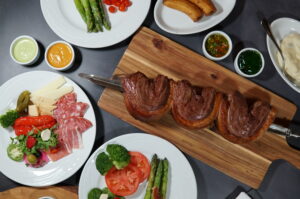

Most people walk into a Brazilian steakhouse thinking about meat.
That makes sense. The picanha, ribeye, filet mignon, lamb, chicken, sausage, and tableside carving are usually what guests picture first. But once the meal starts, a lot of people realize the steak is only part of what makes the table feel Brazilian.
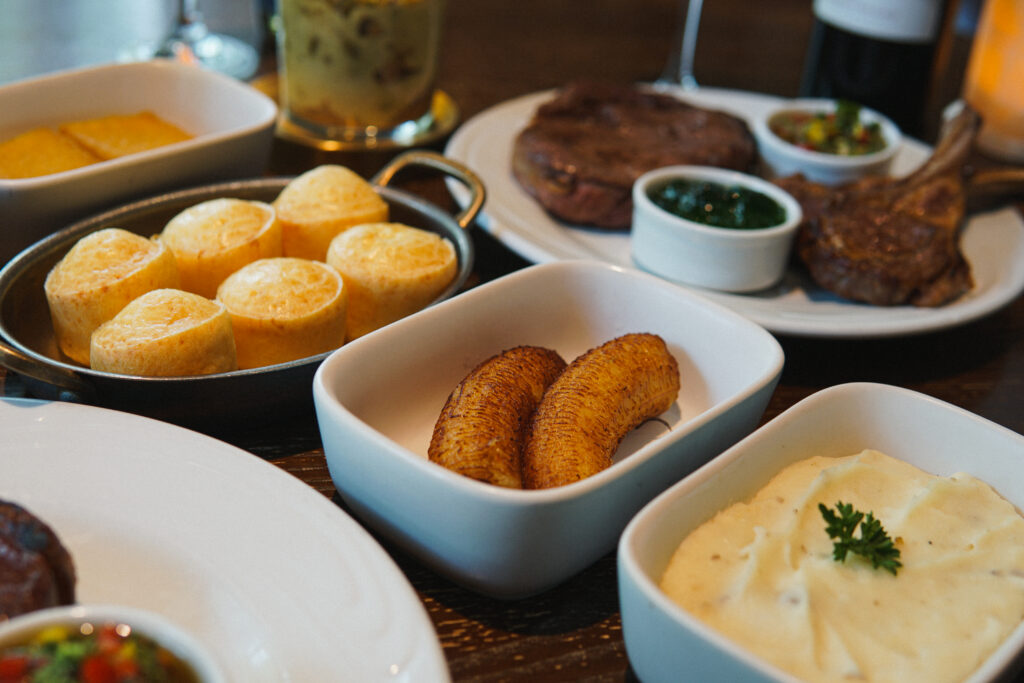
The first surprise is usually pão de queijo. Then comes farofa, rice and beans, crispy polenta, grilled pineapple, caramelized bananas, salads, sauces, and desserts that feel different from the usual steakhouse ending.
Some foods make sense right away. Others take one bite before they click.
If you are looking for a Brazilian steakhouse in Austin or Leander, you may come in expecting fire-roasted meats and picanha steak. The foods around the meat are where many guests start discovering what Brazilian dining actually feels like.
Brazilian Steakhouse Food Goes Beyond Steak
At a traditional American steakhouse, the meal often follows a familiar path: steak, potato, vegetable, sauce, dessert.
A Brazilian steakhouse has a different rhythm.
The plate changes as you eat. You might start with pão de queijo, add rice and beans, try picanha with farofa, take a bite of grilled pineapple after sausage, then go back for another cut of meat. The meal does not stay in one lane.
That is one of the reasons guests searching for a Brazilian restaurant, Brazilian food near me, or a Brazilian steakhouse in Austin often find more variety than they expected. Brazilian steakhouse foods bring together meats, sides, breads, fruit, salads, and desserts in a way that feels more like a shared table than a single entrée.
Pão de Queijo
Pão de queijo is usually the first food that gets people distracted from the steak.
It looks like a small cheese bread, but the texture is what makes people remember it. The outside has a light crispness, while the inside feels chewy, warm, and stretchy from the tapioca flour.
Brazilians eat pão de queijo far beyond steakhouse meals. It shows up with coffee, at breakfast, as an afternoon snack, and before lunch or dinner. It is casual food, but it has a way of making people reach for one more before they even notice.
At a Brazilian steakhouse, pão de queijo sets the tone early. Guests may still be waiting for picanha, but the cheese bread already tells them this meal will not feel like a standard steakhouse dinner.
To learn more about Brazilian dining traditions, read our blog on what makes a Brazilian steakhouse different from a traditional steakhouse.
Farofa
Farofa is probably the food that needs the most explanation at the table.
It looks dry and crumbly, so American guests do not always know what to do with it at first. Brazilians usually make it with toasted cassava flour, and depending on the recipe, it can include butter, herbs, eggs, bacon, onions, or other seasonings.
The easiest way to understand farofa is to add a little to something juicy.
Try it with picanha. Try it with rice and beans. Try it with sausage. Farofa changes the texture of the bite, especially when the meat is rich or the plate has sauce.
That is why it shows up so often with Brazilian barbecue. It gives the meal crunch without turning into a separate “side dish moment.” It works best when it joins everything else on the plate.
For many American guests, farofa goes from confusing to necessary very quickly.
Rice and Beans
Rice and beans do not surprise people because they are unusual. They surprise people because they show up next to steak.
In Brazil, rice and beans are everyday food. Many Brazilians grow up eating them at home, at school, after work, and during family lunches. They are not treated like a special side. They are the base of the plate.
At a Brazilian steakhouse, rice and beans make the meal feel more Brazilian. They sit naturally next to picanha, sausage, chicken, farofa, and sauces. They also give the plate something familiar and comforting between richer cuts of meat.
American steakhouse sides often lean toward mashed potatoes, asparagus, mushrooms, or creamed spinach. Brazilian dining brings rice and beans to the table without making a big announcement about it.
To a Brazilian, picanha with rice, beans, and farofa simply makes sense.
Crispy Polenta
Crispy polenta is one of the easiest foods to like because it does not ask much from you.
Many Americans know polenta as something soft and creamy. At a Brazilian steakhouse, it often comes out golden and crisp, closer to a warm bite you can grab between cuts of meat.
That texture makes it easy to share and easy to keep picking at during the meal. It pairs well with sausage, steak, chicken, or anything savory on the plate.
At Estância, crispy polenta is one of those Brazilian steakhouse foods guests may not have planned to care about. Then it becomes the thing they keep reaching for while waiting for the next cut to come around.
Caramelized Bananas
Caramelized bananas are where some guests pause.
In an American steakhouse setting, sweet foods usually wait until dessert. So seeing warm bananas during the meal can feel unexpected.
Brazilian dining does not always separate sweet and savory so strictly. A bite of caramelized banana after salty, fire-roasted meat can taste surprisingly good. The sweetness softens the plate and gives your mouth a break from heavier cuts.
It also changes the way the meal feels. Instead of going from savory to savory to savory, the plate gets a little warmth and sweetness in the middle.
That is why caramelized bananas often become one of the foods guests did not expect to like as much as they do.
Grilled Pineapple
Grilled pineapple catches people off guard because it shows up in the middle of a steakhouse meal, not at the end.
After picanha, sausage, lamb, or chicken, though, pineapple makes sense. The heat brings out the sweetness, the edges get slightly caramelized, and the acidity makes the next bite of meat feel less heavy.
It is the kind of food people understand as they eat it.
One bite of steak, then pineapple. Another bite of sausage, then pineapple again. The plate keeps moving between salty, smoky, juicy, and sweet.
That back-and-forth is one of the reasons Brazilian steakhouse foods feel different from the usual steakhouse lineup.
The Gourmet Salad Bar
The salad bar can be another surprise, especially for guests who expect something simple.
At many restaurants, “salad bar” means lettuce, dressing, and a few toppings. At a Brazilian steakhouse, the salad bar can bring a much wider range of foods to the meal before the meats even arrive.
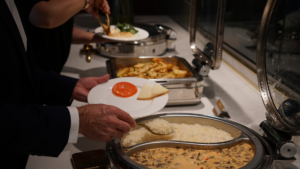
Guests may find fresh vegetables, composed salads, cheeses, cured meats, sauces, and Brazilian-inspired sides. Some people build a lighter plate first. Others find one item they keep going back for because they did not expect it to stand out.
At Estância, the Gourmet Salad Bar gives guests more ways to explore Brazilian food during lunch, dinner, or weekend brunch. It also helps the meal feel less like waiting for meat and more like the experience has already started.
Learn more about the Estância Gourmet Salad Bar.
Brazilian Desserts
Dessert after a Brazilian steakhouse meal does not have to mean something heavy.
After fire-roasted meats, cheese bread, farofa, rice and beans, grilled fruit, and salads, many guests want something creamy, cold, fruity, or caramel-forward. That is where Brazilian-inspired desserts make sense.
Brazilian flan brings smooth caramel flavor. Papaya cream feels cold and refreshing. Tres leches is soft, sweet, and comforting. Caramelized pineapple keeps the warm fruit theme going.
These desserts surprise guests because they feel familiar, but not exactly like the usual steakhouse finish. After a rich meal, a few bites of something creamy or fruit-forward can feel easier than expected.
Save room for dessert at Estância.
Why These Foods Surprise American Guests
Brazilian steakhouse foods surprise many American guests because the meal does not follow the usual steakhouse script.
You are not sitting down to one steak, one starch, one vegetable, and one dessert. The plate changes as the meal goes. Pão de queijo starts the table. Farofa changes the bite of meat. Rice and beans make the plate feel more grounded. Pineapple and caramelized bananas bring sweetness before dessert ever arrives.
That variety is what people remember.
The meat may be the reason guests book the table, but the foods around the meat are often what make the experience feel new.
Frequently Asked Questions About Brazilian Steakhouse Foods
What makes Brazilian steakhouse foods different from regular steakhouse sides?
Regular steakhouse sides usually support one main plate. Brazilian steakhouse foods work more like a shared table, with meats, breads, sides, salads, fruit, and desserts all showing up throughout the meal.
Why do Brazilian steakhouses serve sweet foods with meat?
Brazilian dining does not always separate sweet and savory foods as strictly. Grilled pineapple and caramelized bananas can make rich, salty meats feel lighter and give your palate a break between cuts.
Are Brazilian steakhouse sides meant to be eaten separately or together?
Many of them make more sense together. Farofa tastes better with meat, rice, beans, or sauces. Rice and beans pair naturally with picanha or sausage. The best way to understand the table is to mix a few things on your plate.
What should I try if I have never had Brazilian food before?
Start with picanha, pão de queijo, farofa, rice and beans, grilled pineapple, and one dessert. That gives you fire-roasted meat, cheese bread, crunch, comfort, sweetness, and something creamy at the end.
Where can I try Brazilian steakhouse foods in Austin or Leander?
You can try Brazilian steakhouse foods at Estância Brazilian Steakhouse in Austin and Leander, including fire-roasted meats, pão de queijo, farofa, rice and beans, salads, grilled pineapple, and desserts.
Try the Foods That Make Brazilian Dining Different
The meats may bring people to a Brazilian steakhouse, but the foods around the meat often become part of what guests remember.
Pão de queijo, farofa, rice and beans, crispy polenta, caramelized bananas, grilled pineapple, salads, and desserts all add something different to the meal. Some bring texture. Some bring sweetness. Others make the plate feel more like the kind of food Brazilians grew up eating.
When you visit Estância Brazilian Steakhouse, try more than the cuts of meat. Build a plate with a little bit of everything, especially the foods that feel unfamiliar at first.
Reserve your table at Estância Brazilian Steakhouse.
Visit us in Austin or Leander.
Google Maps – Austin
Maps Apple – Austin
Google Maps – Leander
Maps Apple- Leander