

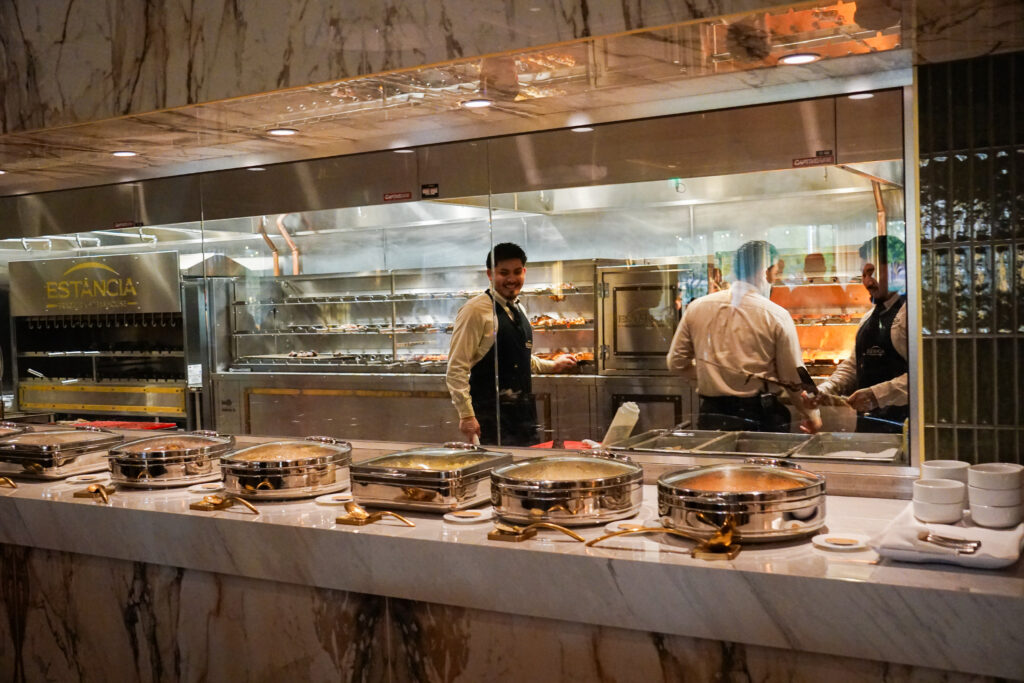
If you’ve ever visited a Brazilian steakhouse, you may have heard the word gaucho used to describe the people serving fire-roasted meats tableside.
But what is a gaucho?
A gaucho is a skilled horseman and cattle rancher from the grasslands of Southern Brazil, Argentina, Uruguay, and parts of Paraguay. Often compared to the American cowboy, gauchos became known for their horsemanship, independence, cattle handling, and open-fire cooking traditions.
Today, the gaucho remains one of the most recognizable symbols of Southern Brazilian culture. Their influence can still be seen in the way churrasco is prepared, shared, and served in Brazilian steakhouses around the world.
If you’re wondering what a gaucho is and why the tradition remains such an important part of the Brazilian steakhouse experience, it all starts with a culture built around hospitality, craftsmanship, and gathering around great food.
More Than a South American Cowboy
Many people describe gauchos as the South American version of cowboys.
While there are similarities, the gaucho represents a distinct cultural tradition.
For generations, gauchos worked across the vast grasslands known as the Pampas, caring for cattle and living much of their lives on horseback. Their daily routines revolved around ranching, hard work, self-reliance, and preparing meals over open flames.
You may have heard the word gaucho recently in fashion, particularly through the popularity of gaucho pants. While the clothing style takes inspiration from the traditional attire worn by South American gauchos, the term originally refers to the skilled horsemen and cattle ranchers who helped shape the culture of Southern Brazil, Argentina, and Uruguay.
Over time, gauchos became cultural icons throughout Southern Brazil and neighboring countries, celebrated for their resilience, hospitality, and deep connection to the land.
The Connection Between Gauchos and Churrasco
To understand what a gaucho is, it’s important to understand churrasco.
Churrasco is the traditional Brazilian style of grilling meat over an open flame. The cooking method traces many of its roots back to the gauchos of Southern Brazil, who would prepare large cuts of beef over wood fires while working the ranchlands.
These meals were simple, flavorful, and designed to bring people together.
Over time, churrasco evolved into one of Brazil’s most celebrated culinary traditions.
Today, many of the techniques associated with Brazilian steakhouses are inspired by those same cooking traditions.
How Gauchos Inspired Brazilian Steakhouse Service
The modern Brazilian steakhouse is built on more than great food.
It is built on the spirit of the gaucho.
Rather than preparing a single entrée and sending it to the table, Brazilian steakhouse service is designed around continuous hospitality. Freshly grilled meats are brought directly to guests, sliced tableside, and served throughout the meal.
The goal is not simply to serve food.
The goal is to create an experience.
This style of service reflects many of the same values associated with gaucho culture: generosity, craftsmanship, hospitality, and sharing meals with others.
If you’re curious about what makes this experience different from a traditional steakhouse, you may also enjoy reading Brazilian Steakhouse vs Traditional Steakhouse.
Why Are Servers Called Gauchos?
One of the most common questions guests ask is why Brazilian steakhouse servers are called gauchos.
The answer is simple.
The gauchos serving meat tableside today help carry on the traditions that inspired Brazilian churrasco culture.
While modern restaurant gauchos are not cattle ranchers, they represent the same commitment to hospitality, pride in preparation, and respect for the craft of serving great food.
When a gaucho approaches your table with picanha, filet mignon, lamb chops, or another fire-roasted selection, they are participating in a tradition that dates back generations.
That connection to history is part of what makes the experience memorable.
What Guests Remember Most
When guests talk about their favorite Brazilian steakhouse experiences, they often mention the gauchos.
Not just because of the meats they serve, but because of the hospitality they provide.
Guests frequently remember discovering picanha for the first time, learning about different cuts, enjoying recommendations, and interacting with the gauchos throughout the meal.
They remember the experience as much as the food itself.
Of course, great food plays a role too.
Many guests return for favorites like picanha, garlic beef, lamb chops, pão de queijo, Brazilian lemonade, and house-made desserts.
If you’re planning your first visit, you may also enjoy reading:
Desserts Worth Saving Room For
Lunch at Estância: A Different Kind of Midday Experience
Why the Gaucho Tradition Still Matters Today
Understanding what a gaucho is helps explain why Brazilian steakhouse service feels so different.
The tradition goes beyond tableside carving or fire-roasted meats.
At its heart, the gaucho represents hospitality, craftsmanship, and bringing people together around the table.
That spirit continues to shape the Brazilian steakhouse experience today.
Every time a gaucho arrives at your table with a freshly grilled cut of meat, you’re experiencing a tradition that began generations ago in Southern Brazil and continues to bring people together today.
Whether you’re visiting for lunch, dinner, a family gathering, or a special celebration, the gaucho tradition remains one of the reasons the Brazilian steakhouse experience feels unlike any other.
Ready to experience it for yourself?
Google Maps – Austin
Maps Apple – Austin
Google Maps – Leander
Maps Apple- Leander